 Back
Back
Published 2026.04.14
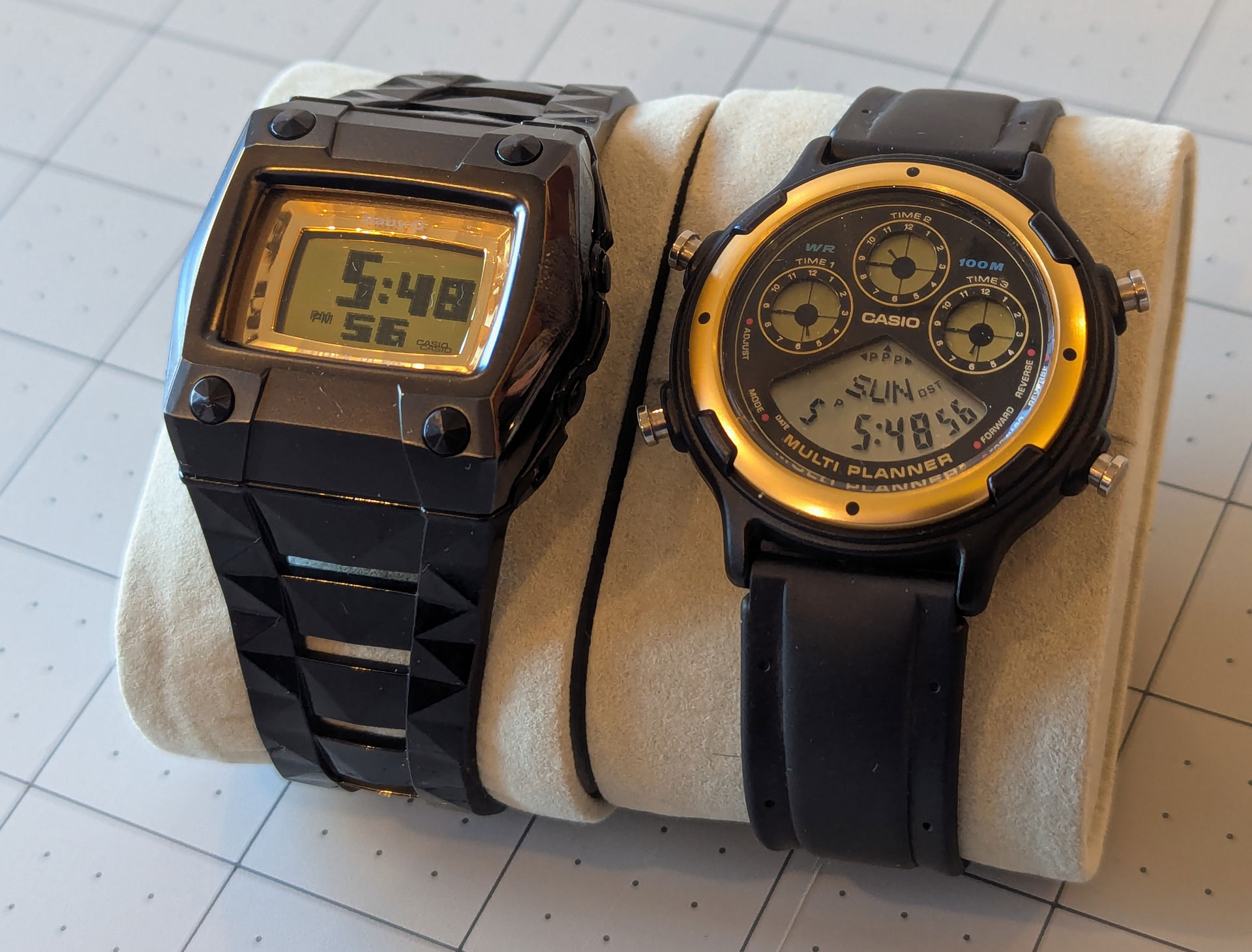
Today's post is about two gems from my collection of Casio digital watches. Both are long-discontinued models in black resin with gold bezels, and both feature unorthodox designs and unexpected capabilities not present in any digital watches currently manufactured by Casio.
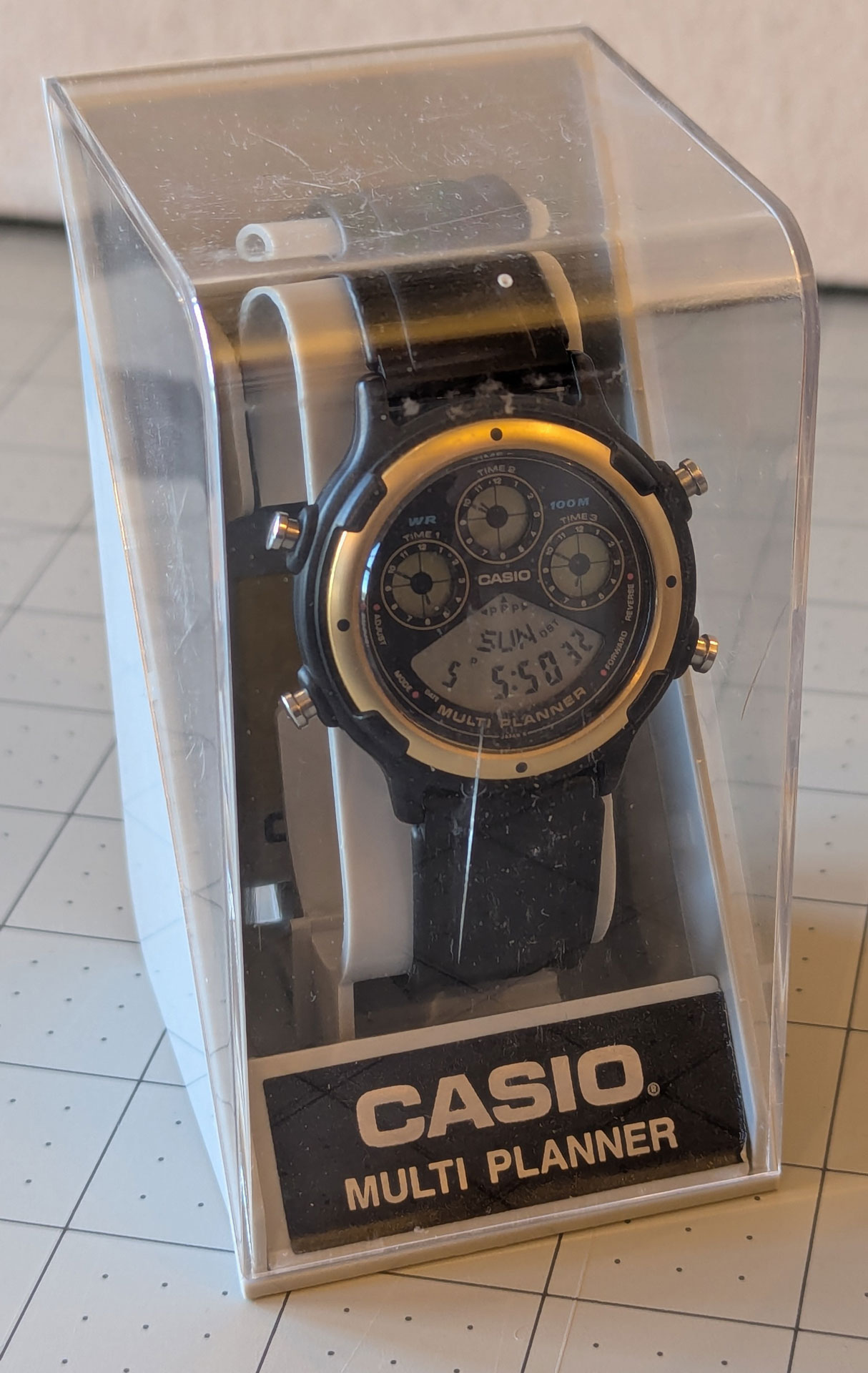
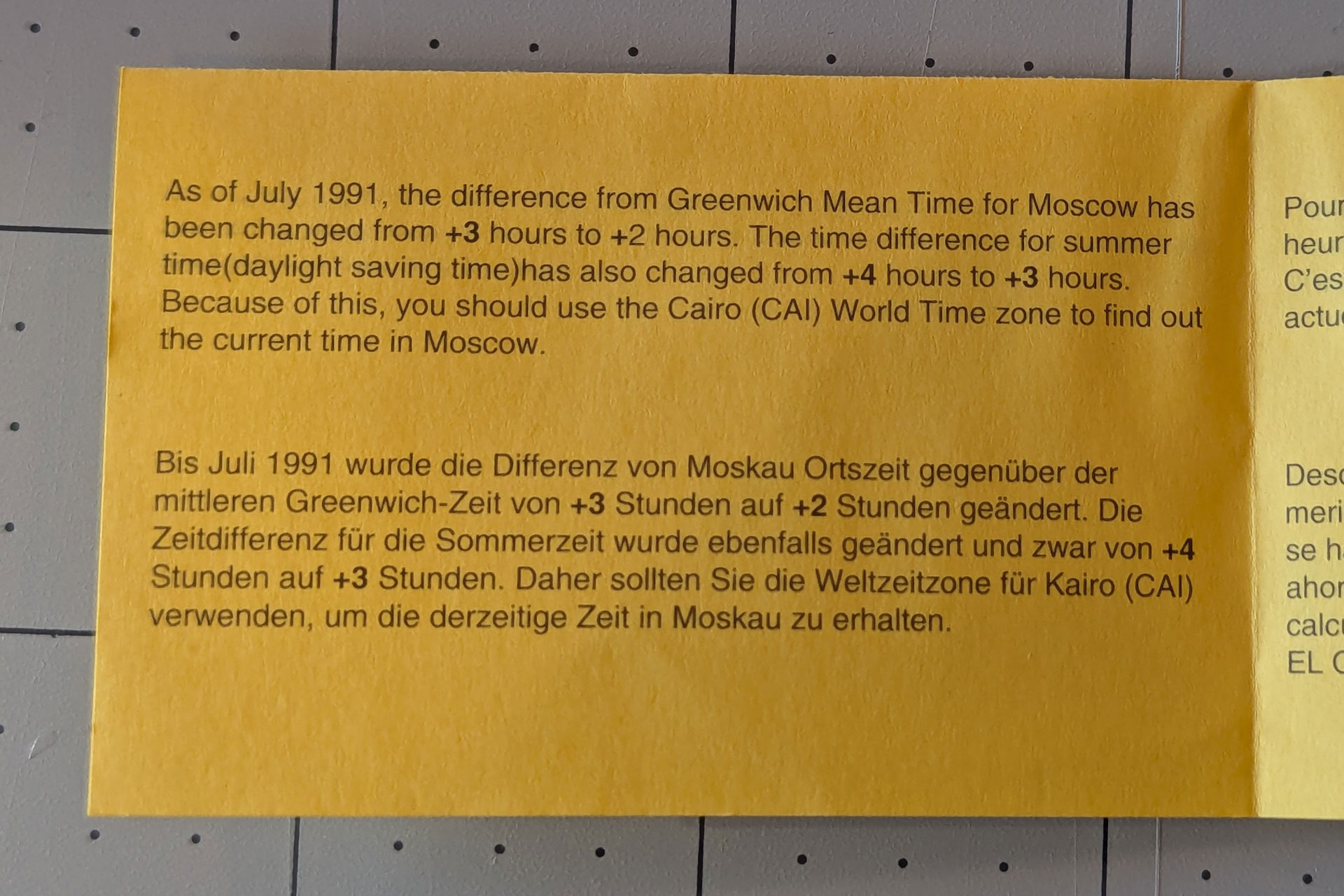
The first of today's retro timepieces is the BGP-20 "Multi Planner" which was introduced in 1990. This is currently the oldest Casio in my collection: old enough to be made in Japan, have a triple-digit module number (931), and predate the fall of the Soviet Union. In fact, the owner's manual for this watch—which I acquired as new old stock complete with its original packaging—has an added insert informing users of a time zone change for Moscow as of July 1991 from GMT+3 to GMT+2.
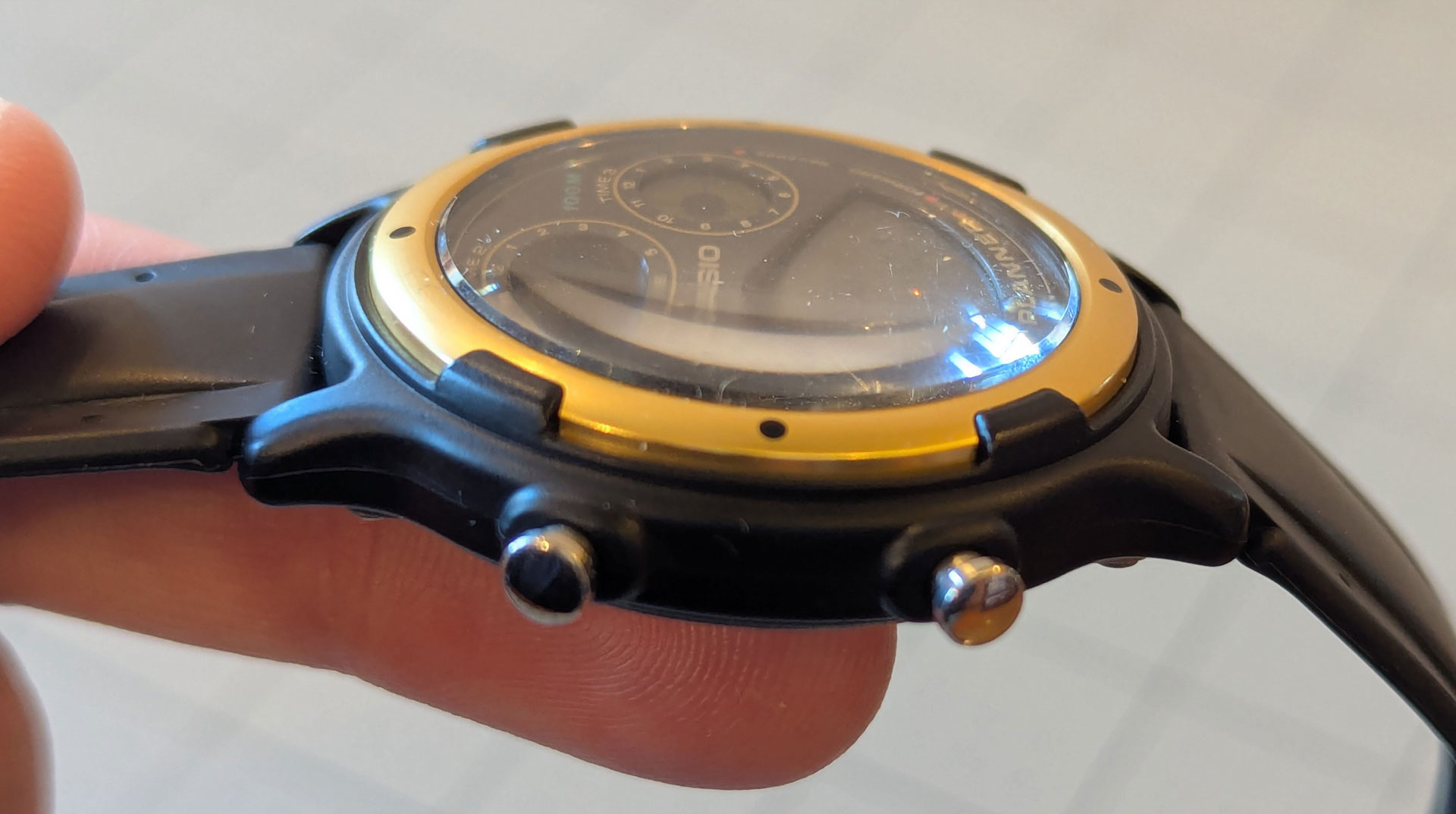
The BGP-20 is made of resin with the standard stainless steel back held in place with four screws and a domed acrylic crystal. It has a good quoted water resistance of 100 meters, but I wouldn't trust it to have maintained its full water resistance over the past 36 years. It features four buttons—or pushers—in this odd bolt or mushroom shape. They stick out much farther than the pushers on a typical Casio and are angled, making them quite easy to push, which is good because if you make full use of the BGP-20's features, you'll be pushing them a lot to enter information character-by-character.
It's light and thin and wears well on my 6.5" wrist. Despite its age, the resin strap of my Multi Planner has held up really well and seems to be a cut above the usual Casio fare: it's quite soft and comfortable. The buckle is Casio-branded, but it's only plastic.
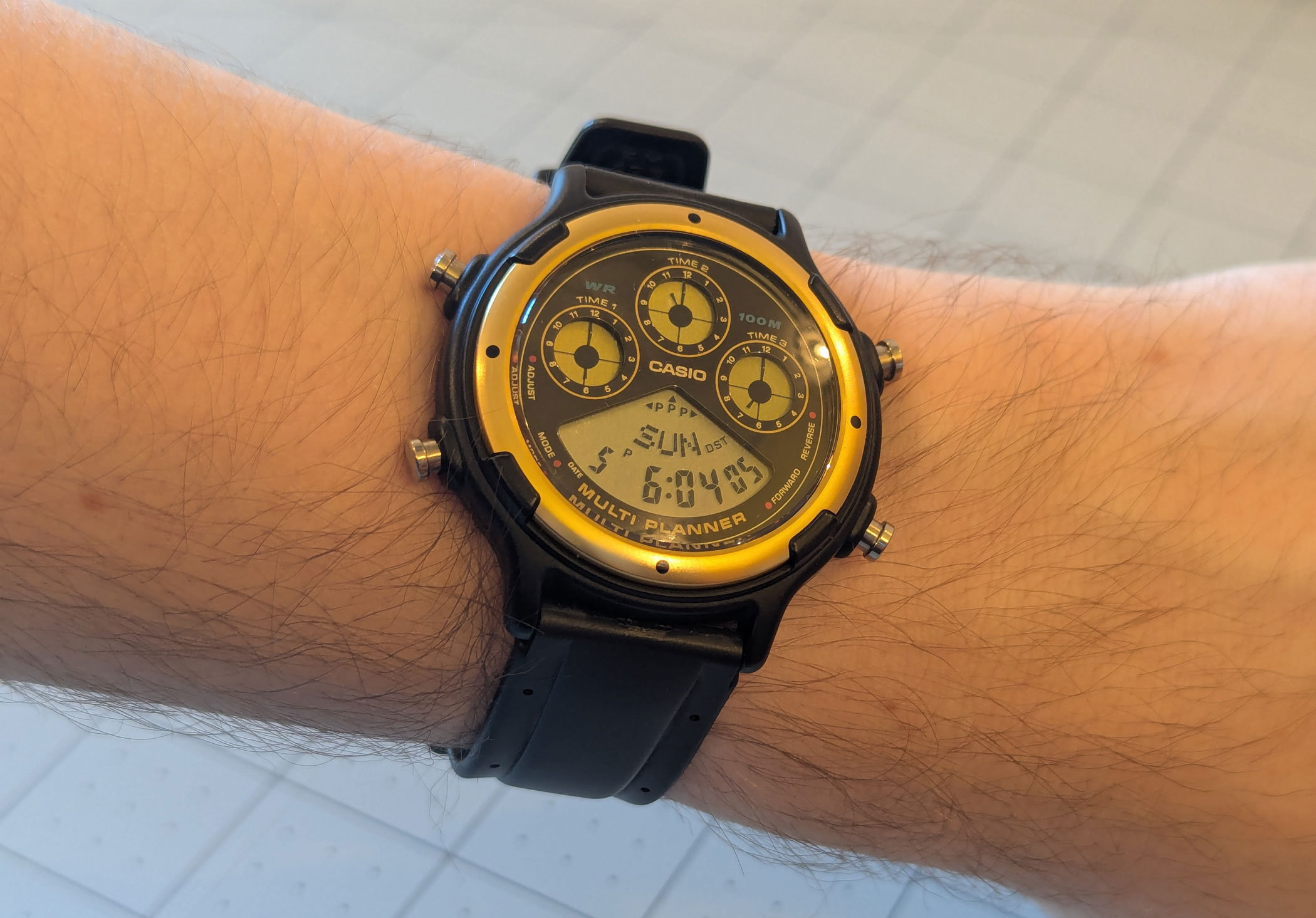
In terms of the design, the Multi Planner is truly an odd duck. Its dial features a pie-slice-shaped section of LCD where the bulk of the relevant information is crammed into a rather small area with curved numerals, a curved date display, and a few additional indicators such as the four "PM" indicators for each of the time displays. Above the pie slice are three round areas with a yellow tint that serve as multi-purpose subdials for different features of the watch.
Therein lies my first nitpick with the Multi Planner: I'm not convinced by the execution of this design. In normal timekeeping mode, they can show either three additional time zones or the times of your next three upcoming alarms. In theory, that means the watch is able to show a great deal of information simultaneously. In practice, the minuscule size of the details make it difficult to read the main time, much less the tiny subdials.
An exercise in reading the BGP-20:
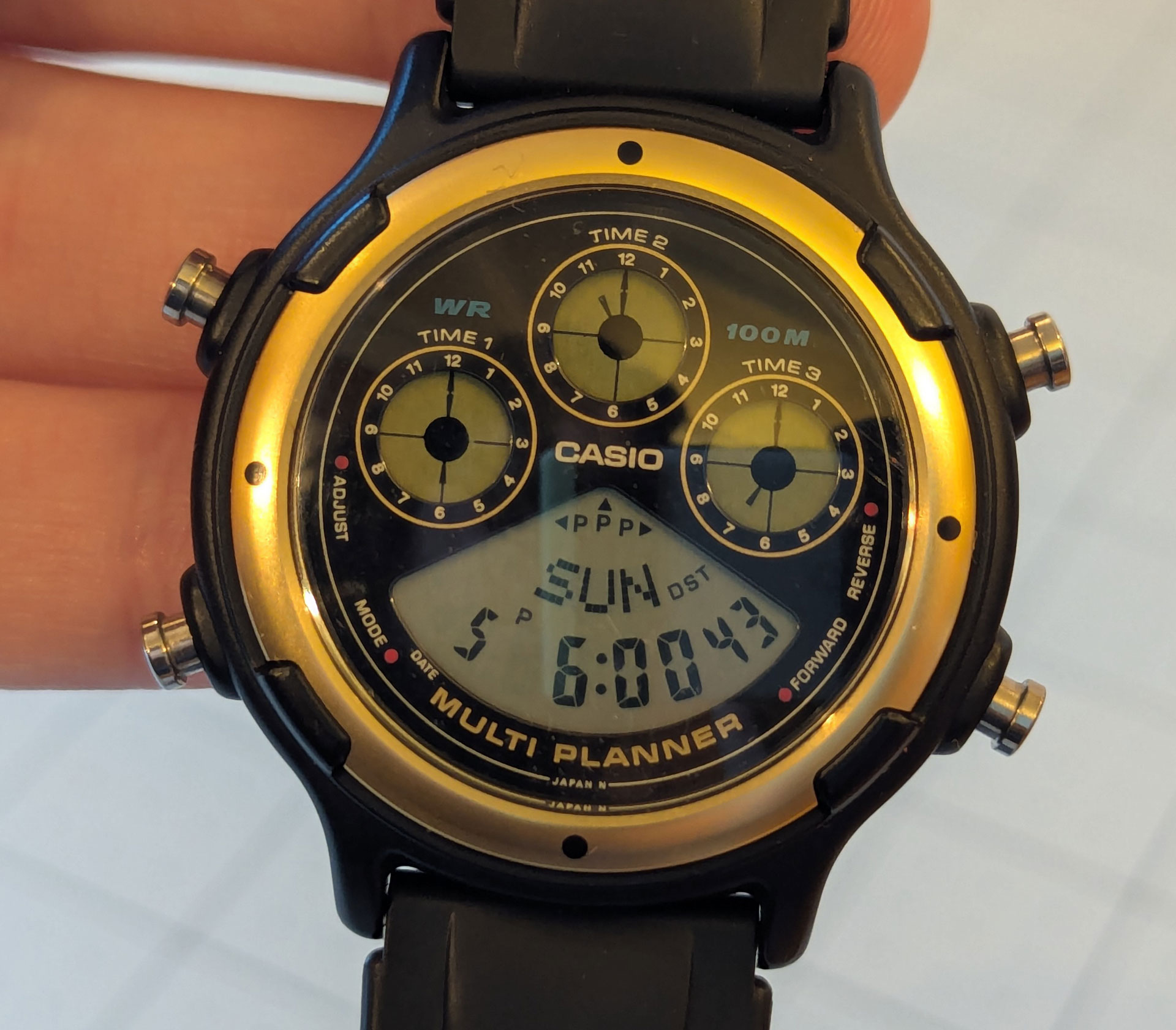
Can you tell what time it is in each of the three time zones? Note the various "P" indicators showing it's past noon in all of them. The other information is all over the place in a strange and asymmetric way, with the main PM indicator hovering somewhere in the no man's land between the date and the time.
Alas, this constructive criticism comes over three decades too late. Given its historic nature, it's better not to dwell overmuch on the problems with its design. Instead, I will simply say that the design is quirky and the legibility leaves something to be desired and leave it at that. There's a reason iconic models like the square G-SHOCK and the F-91W have lived on to the modern age while the Multi Planner has not.
Luckily, the designers of the Multi Planner took the poor legibility into account and added a quick way to cycle through the selected time zones to read them more easily. But if you have to press a button to view the other time zones, the convenience of showing them all at once is somewhat diminished, and it may have been preferable to simply have a larger main time display.
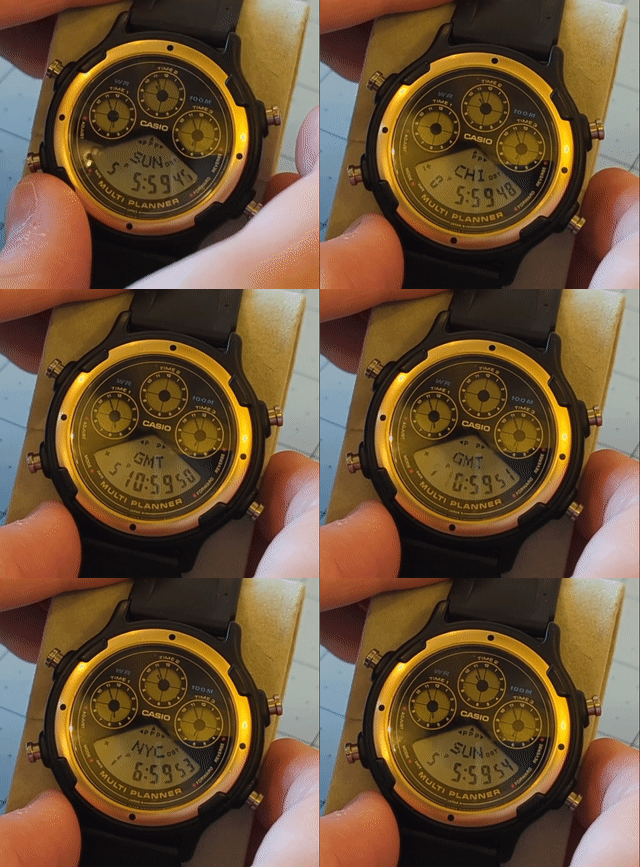
Here the BGP-20 flashes through the selected time zones on each of its subdials.
The other functions of the Multi Planner are also eclectic. In addition to the main timekeeping mode, the BGP-20 has a world time function which allows you to cycle through 29 time zones while simultaneously displaying the 3 selected time zones on the little subdials. There's an alarm mode which lets you schedule up to 60 "memo alarms" which can be set to be recurring or for a specific date and can display a custom message up to 16 characters long when they go off. There is also an hourly signal to beep on the hour. Next, there's the "Tele-Memo" mode which can store up to 30 contacts with name and phone number. This is one of those features that used to be desirable in a digital watch and used to be fairly common on more capable Casios but has been mostly abandoned for obvious reasons. Lastly, there is a stopwatch mode which I quite like. It displays the minutes, seconds, and fractions of a second on the three LCD subdials which provides some visual interest.
Unfortunately, the BGP-20 has no backlight or countdown timer, both of which would have been welcome additions. Beyond that, if I could change one thing about the Multi Planner, I would have given it a more detailed LCD for the "analog" subdial displays, like the one found on the AE-1200. The AE-1200's display features 120 segments and can therefore show the time to the minute. The BGP-20 on the other hand, only features 24 segments on each display and rounds to the nearest 5 minutes. I suspect in 1990 that this level of complexity wouldn't have been feasible and in fairness, given how tiny these subdials are, it wouldn't make a huge difference.
Overall, I quite like the Multi Planner, even if it's harder to read than most digital watches. The design looks good, despite how busy it is, due to its symmetry (at least for the larger elements and different sections). It strikes me as classy with its unpretentious resin construction mixed with a touch of gold accent and its design evokes a somewhat nautical feeling with the pushers resembling the handles of a ship's wheel. Its features, while largely irrelevant to modern users, would have made it a welcome companion in its heyday: an alternative to a personal organizer that can fit on your wrist. Watches like the BGP-20 almost make me regret having a large collection of watches, as I think it would be interesting to commit to wearing the same watch every day, memorizing its functions and using it for alarms and scheduled reminders. Alas, my wrist and my heart are bound to roam to greener pastures, and I suspect over time the imperfections of the Multi Planner would bother me if I wore it every day. Sometimes, absence makes the heart grow fonder.
The BGP-20 seems to overlap with the features of a few different models of the same vintage. The manual for module 931 also applies to 954, found in the Flight Planner, which looks similar but with a layout that eschews the "pie slice" in favor of a hockey-stick shaped row of indicators and an asymmetric section to display the date and time. I unfortunately couldn't find any images of the Flight Planner outside of online sales listings, but the model number for your reference is DW-7700.
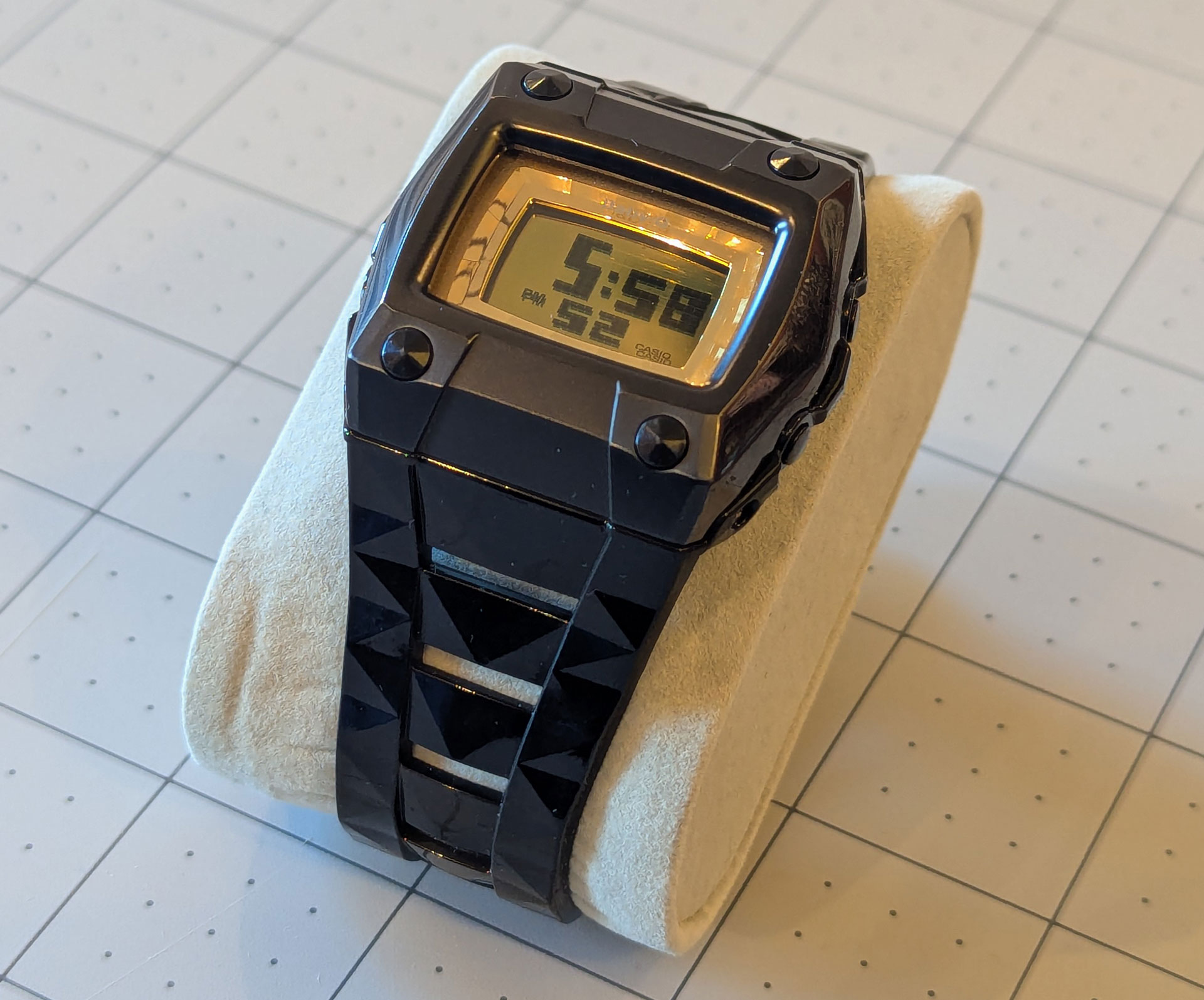
Jumping ahead 17 years, we have the Baby-G BG-2100 with module 3097. It is similar in many ways to the BGP-20 and in other ways completely different. Like the previous watch, it is long-discontinued but came in black with gold accents and has a quirky feature set not found on any modern Casio. Unlike the Multi Planner, however, it's a thick rectangular watch with a super readable display and it comes from the Baby-G line of sporty G-SHOCK watches aimed at the kids' and ladies' market. Some people find this branding off-putting, but it's a cute watch and deserves a cute name.
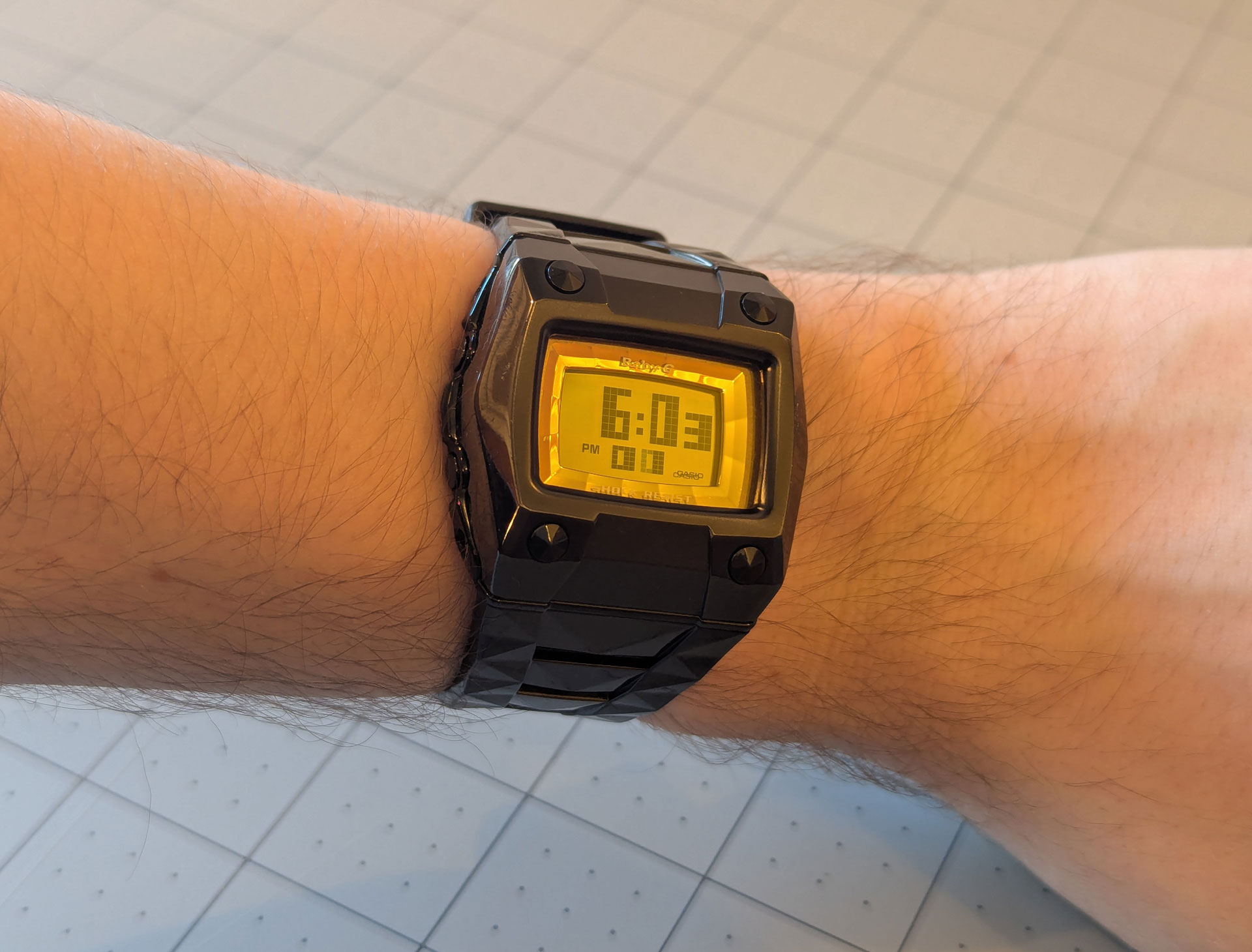
Despite the label and intended market, I don't think there's anything wrong with a grown man wearing this watch either. It's plenty large: just a smidgen smaller than the DW-5600; and to me doesn't look too childish. It fits well on my 6.5" wrist; as someone with a smaller wrist I actually prefer the fit of this to most men's G-SHOCKs which look okay on me (they wear large on basically everyone) but tend to have a lot of extra strap wrapping around to the front of the watch. That said, anyone with a wrist much over 7" may run into an issue sizing this one, as the strap is clearly designed with the smaller-wristed in mind. And, as with any watch like this, the strap is integrated and not really replaceable.
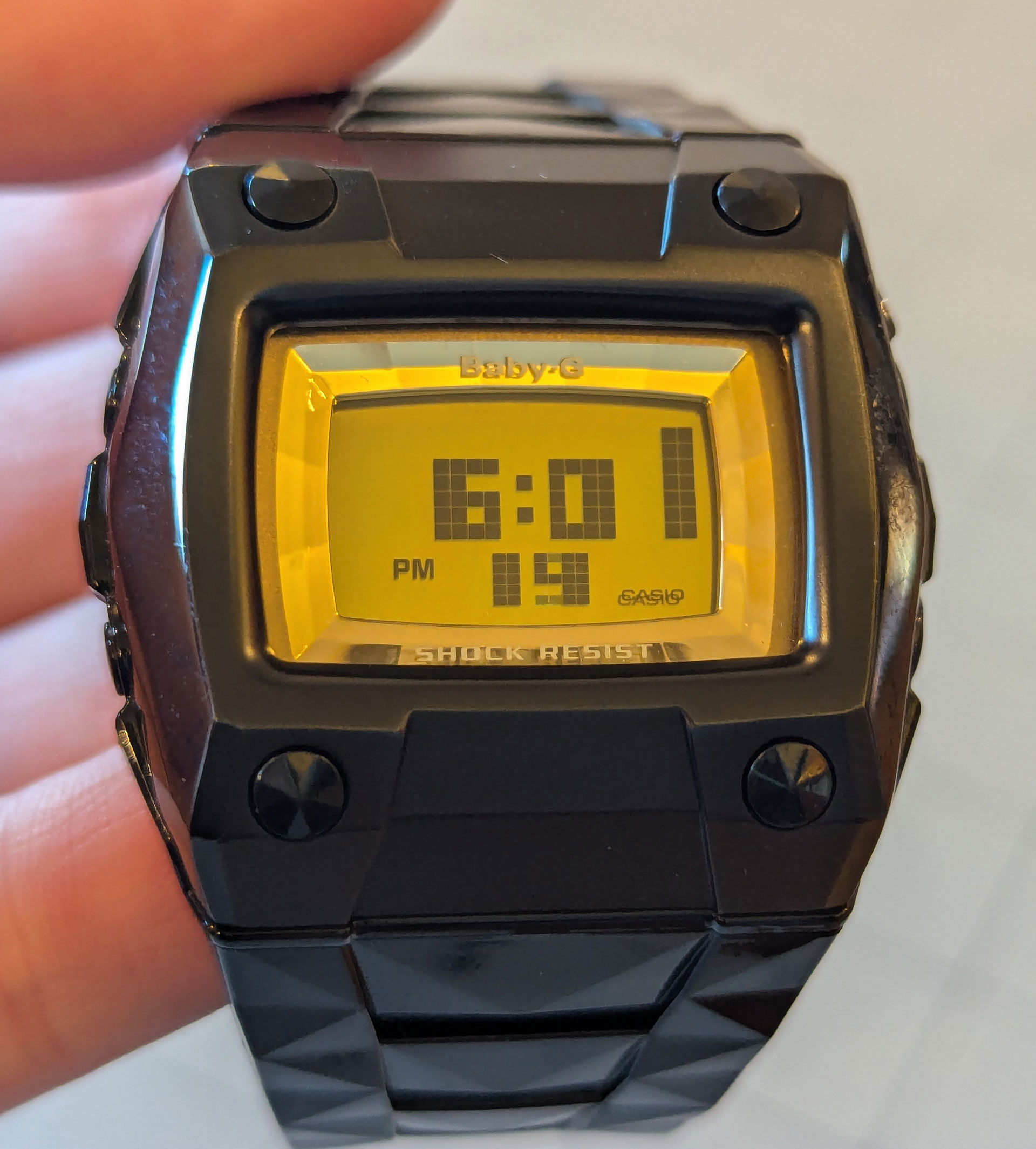
The watch and strap are constructed of glossy resin with a stainless steel back and a flat mineral crystal protected by a hard plastic bezel that sticks out quite prominently. The LCD has a reflective gold-tinted filter on it, producing quite a pleasing effect in the light without impacting the legibility much. The buttons are plastic and sit flush to the side of the case but are nevertheless easy to push. The BG-2100 was made in Thailand and has 100 meters of claimed water resistance. Like any G-SHOCK, I would expect it to hold up quite well to any abuse, but given its age, excellent condition, and relative rarity, I personally intend to baby this Baby-G.
The Baby-G's main timekeeping display features large numbers which show the time only. To view the date, it's necessary to press one of the buttons. Its other features are a 1-60 minute countdown timer, a stop watch, a single alarm (no hourly beep), and a second time zone (which can be independently set to any time, which allows half-hour time zones).
Given this fairly modest set of modes, why then did I say this watch has a quirky feature set? Because of its "Active Display."
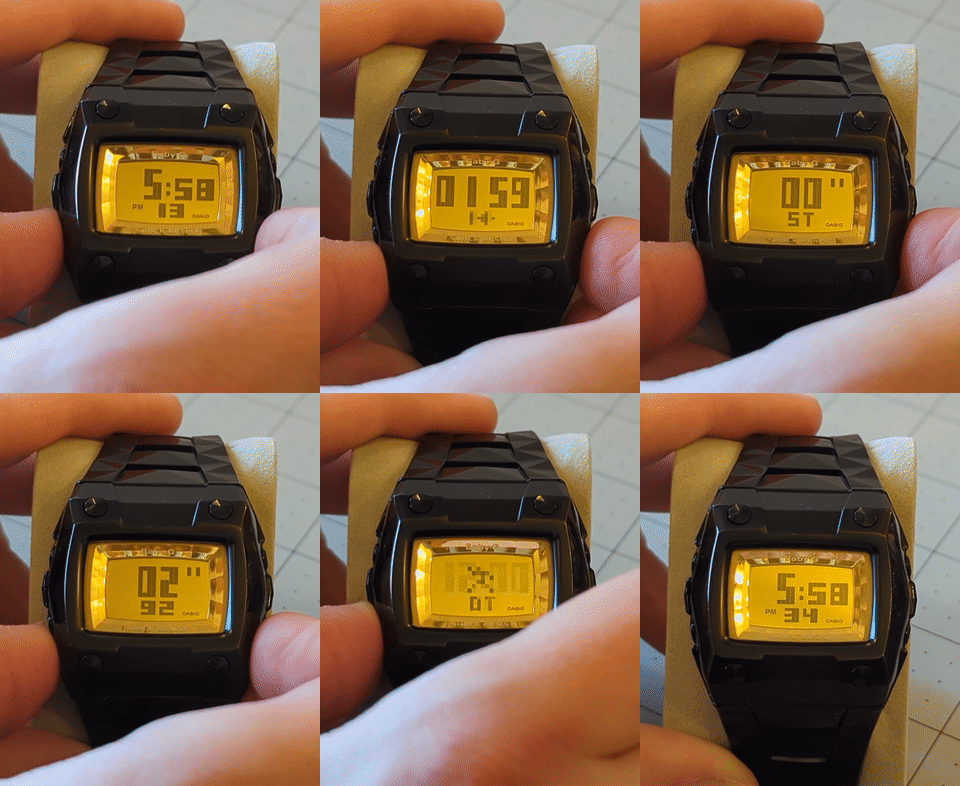
Rather than the typical segment display to create the numbers, the BG-2100 uses a grid of LCD pixels, enabling it to show somewhat rudimentary graphics. Whenever you change modes, you're greeted to a beepy little melody and a blocky animation of a break-dancer. And each of the modes has a very unique display with an animation: the countdown timer has arrows showing the movement of the time, the stopwatch has a little spinning disc, and the main time is configurable to one of 6 different styles, each of which has a different animation while idle. To top it all off, this watch also features a tilt sensor—not for an automatic backlight, which is a fairly common feature—but rather to play a special animation when you lift the watch to view the time. With Active Display on, the watch will periodically switch between the different styles or you can manually leave it on the style of your choice. This is a super fun addition and really adds a lot of character to the Baby-G.
So, without further ado, here are the different wrist-tilt animations along with my thoughts on them:
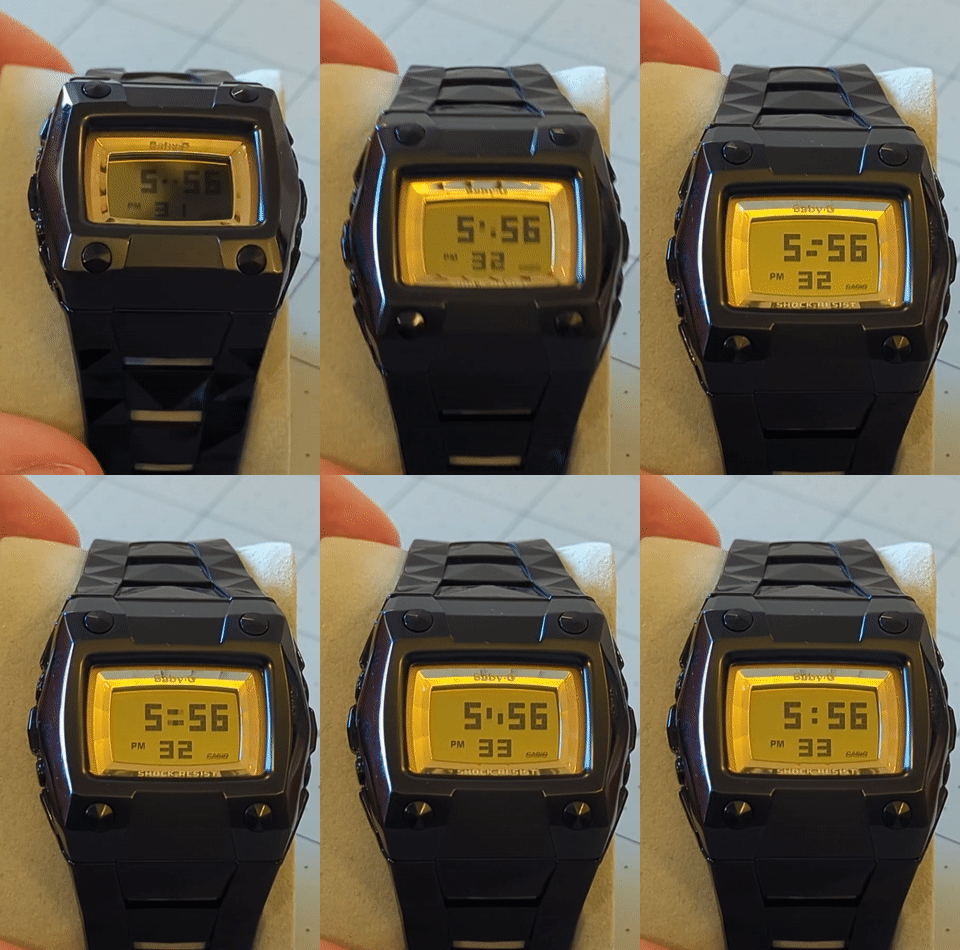
Small text with spinning dots. A bit bland but totally usable.
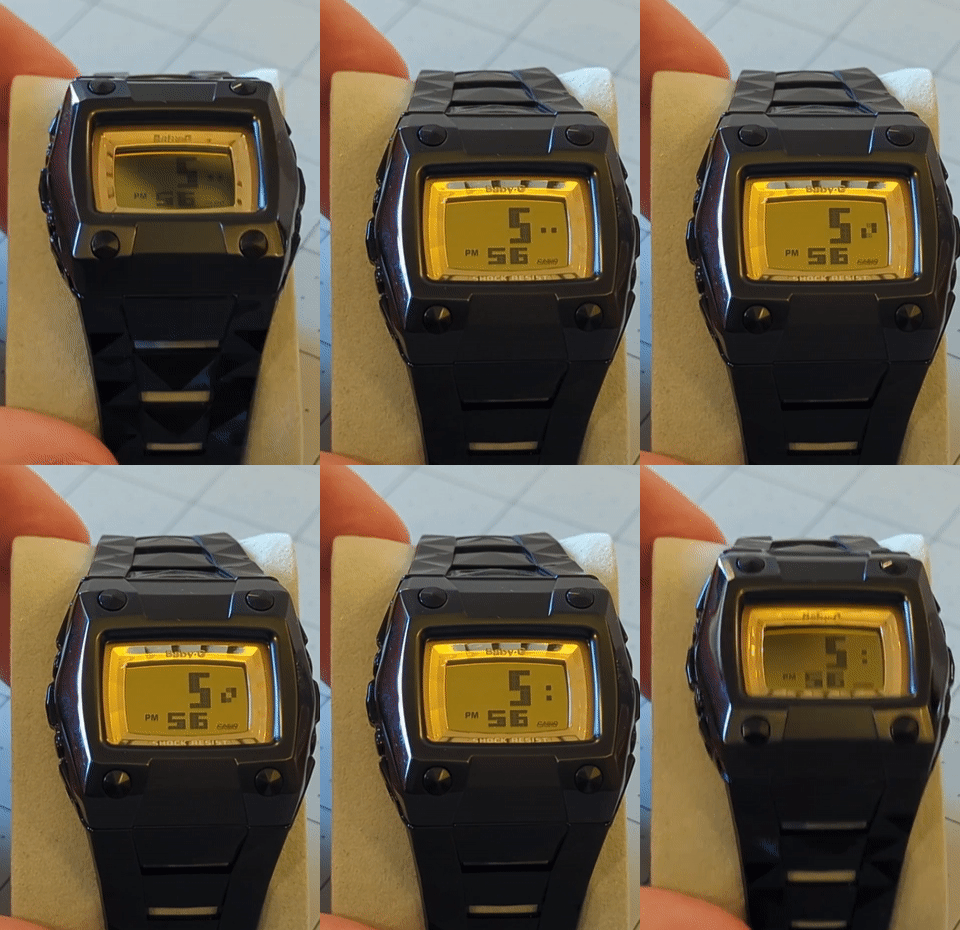
Large text with spinning dots. No seconds are shown. I'm not a big fan of this display, it seems a bit too asymmetric for me.
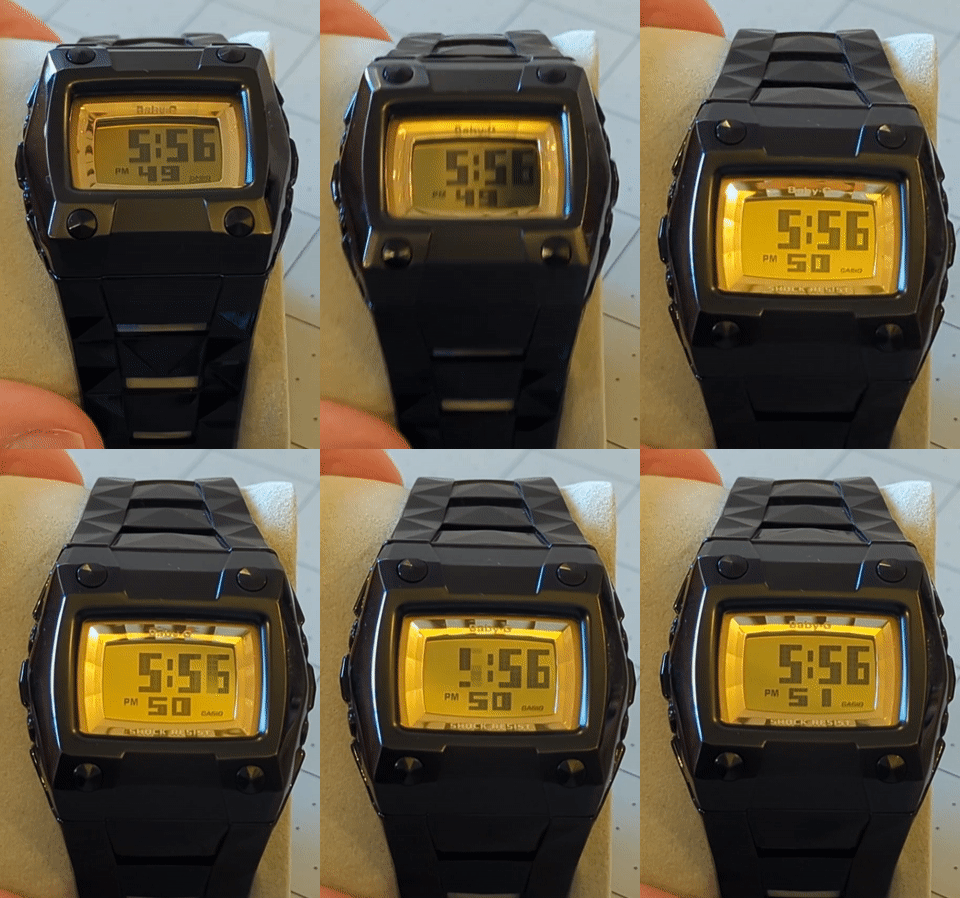
Large text with a sweep/scan effect. I'm torn on this style. I think the large numbers look good and are easy to read, but the animation here is the weakest of all of them. It's barely noticeable and almost looks like the LCD is malfunctioning, but that's just what it looks like.
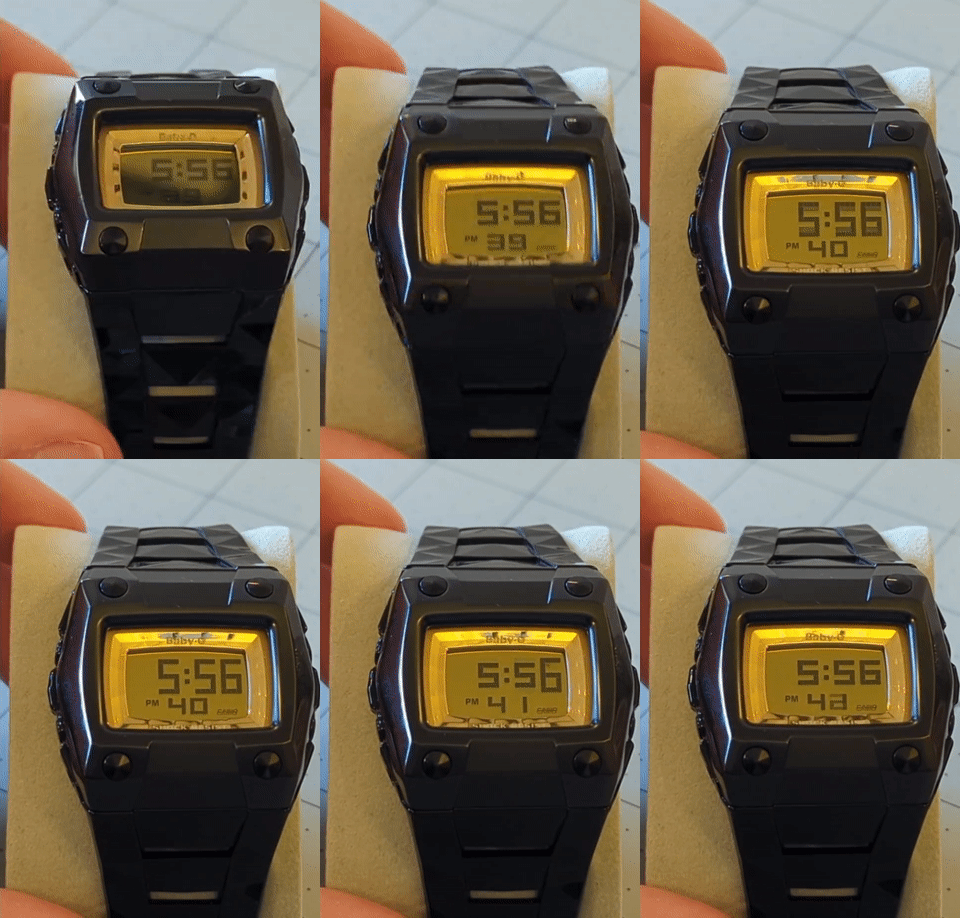
Small text that pops up then goes back down. This one is quite nice!
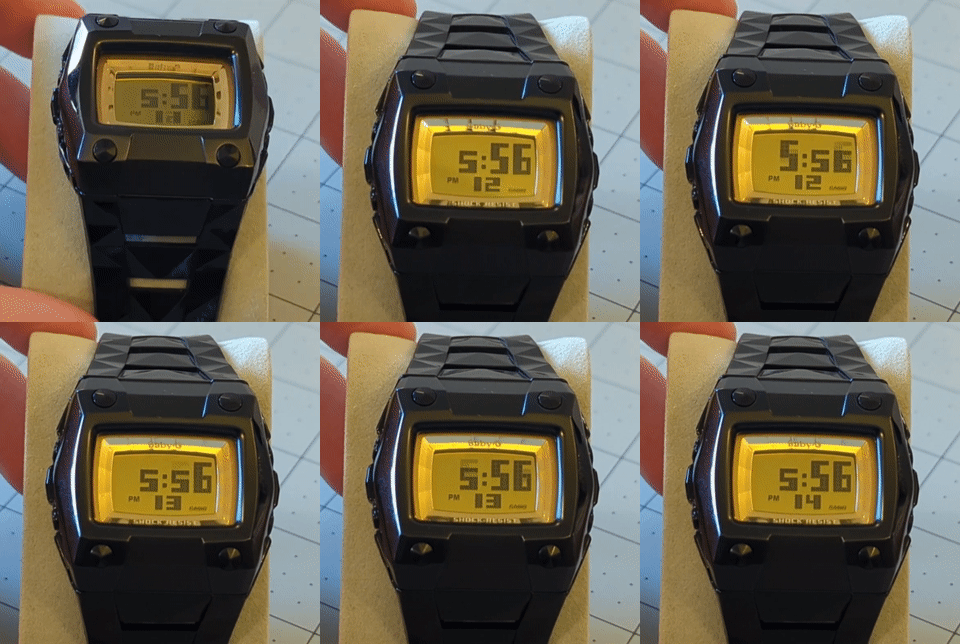
Large text that bounces up and down. I think this is my favorite of the displays. It uses a good portion of the screen but still shows the seconds, and the animation is very cute without being distracting.
There is also a "Secret Style" which only appears when Active Display is enabled. Since Active Display mode means the watch only changes style every so often, I had to wear the watch all day and then take the video when the secret style finally came up. As a result, the video I managed to capture is not the best, but hopefully will suffice to demonstrate the "Secret Style" which consists of large numbers for the hours that get split apart to make room for one of the various dancing animations when you check the time.
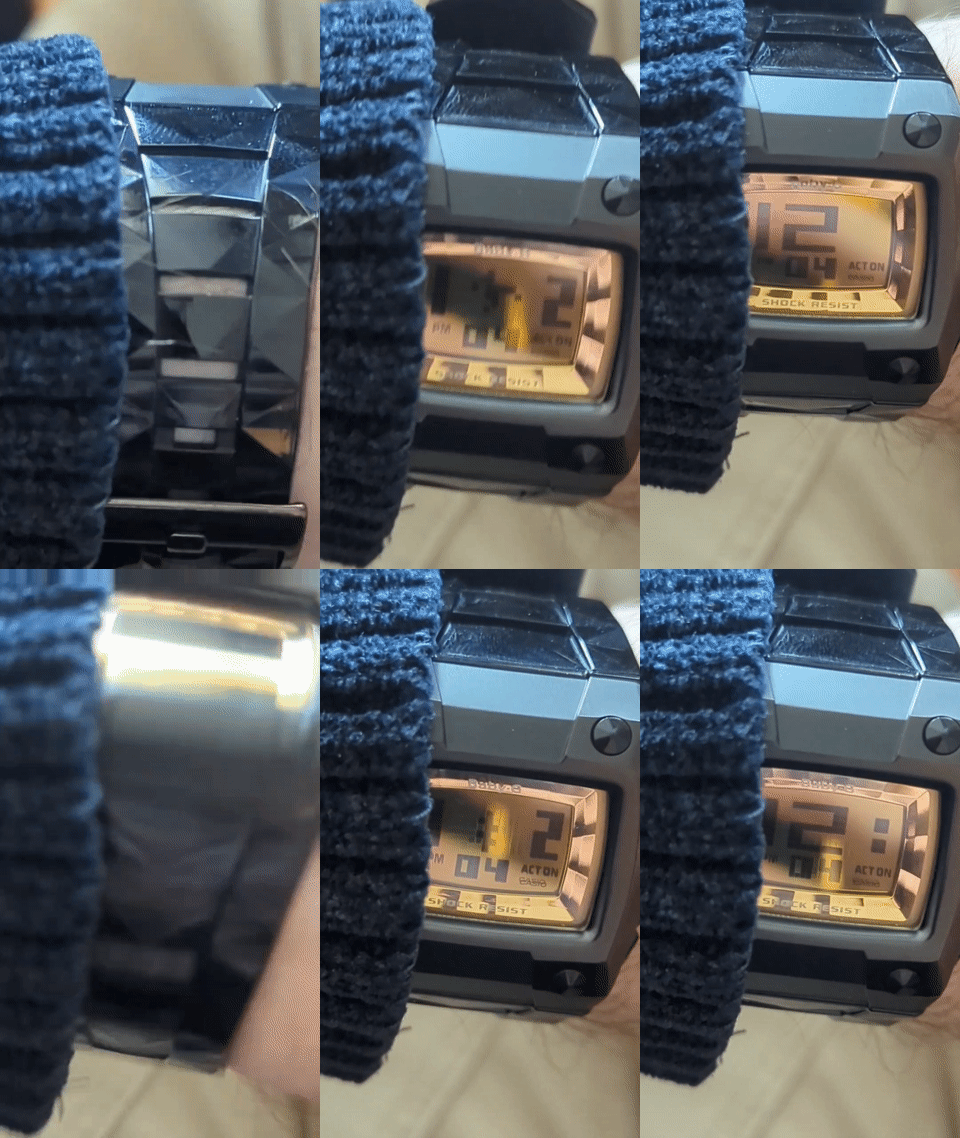
I like the idea of the "Secret Style" and have no doubt it would have appealed to kids who would have to rush to show it to their friends before it switched. At the same time, it's annoying that you can't just select this style along with the others. Luckily, we're not missing out on much: the same dancer animations are played when changing modes, and I find this style to be among the worst in terms of actually checking the time because the numbers move around while the animation plays. It's cute, but not practical.
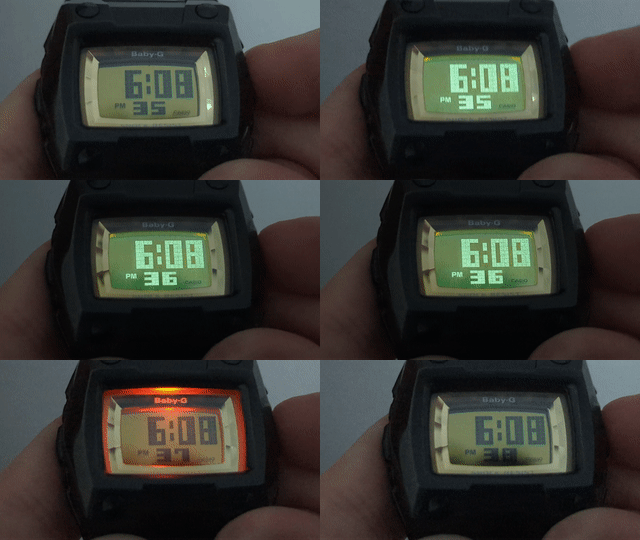
The other biggest quirk of the BG-2100 is its flash alarm. Flashing the backlight when the alarm goes off is not unique to this watch, but I'm not aware of any other Casio watch that has special red LEDs just for the flash alarm. When the alarm or countdown timer sounds, the electroluminescent backlight flashes a number of times, and if you don't stop it, two red lights above and below the face of the watch will start to flash as well. You can't turn this off. I guess the idea behind that is to get your attention if you're in a place that's both dark and too loud to see the watch, such as break-dancing at a raucous nightclub (this is surely what Casio had in mind).
The last odd feature that bears mentioning is the different time format settings. It has the expected 12 and 24 hour modes, but also features a 0-11 mode which starts the day at 00:00 and rolls back over to 00:00 at noon; and a 6-29 mode, which is 24 hour time but switches the date at 6 AM. I guess that might hypothetically be useful for someone, but I'm not sure whom… perhaps overnight workers whose shifts are based on the start of their shift. At any rate, it seems like a niche addition.
So that's the Baby-G BG-2100. Its features put it somewhere in the middle of the Casio spectrum: it does more than a basic F-91W, but lacks certain things you'd expect on a more capable watch. It's not the most practical watch given the fact that it doesn't display the date or day of the week on the main timekeeping mode, but it has a flair all its own, hiding its over-the-top cuteness and charm in an understated package. At any distance much farther than arm's length, it just looks like a rather unassuming digital sports watch. It's the kind of watch that anyone could wear, and doesn't make much of a statement beyond "I am a person who wants to know what time it is," but inside is a module that will make you smile every time you check the time.
As a footnote in the tale of the Baby-G, I must note that my experience getting this watch working was not without struggle. I managed to snag it on eBay at a quite reasonable price in seemingly-working condition (and great shape cosmetically; it looks unworn), but when it arrived I noticed something was amiss. The watch worked in just about every way you'd expect. But consulting the manual, it was like a totally different watch. I've never encountered anything like this before. It kept time just fine. The alarm, stopwatch, and timer all functioned as they should. But the display was locked into a single style, the active display setting was nowhere to be found, none of the animations worked, the LEDs didn't light up, and the style of the different modes' display was totally wrong. I first suspected somehow I'd received a fake watch, or perhaps a different variation of the BG-2100 with a different manual, but eventually I opened it up to check if there was a problem with the battery, and after uninstalling and reinstalling the very same battery it had arrived with, everything began to work as expected. I have no definitive explanation for this behavior, but my best guess is that the battery was not contacting correctly and some component of the watch wasn't getting power. How that could result in a fully functional watch but with slight differences, I'm not sure.
The BG-2100 was also available in at least two other colors: black with a negative display and red strap; and gold with a negative display and black strap. Unfortunately, researching this watch online isn't the easiest thing due to the massive popularity of the modern G-SHOCK 2100 range.
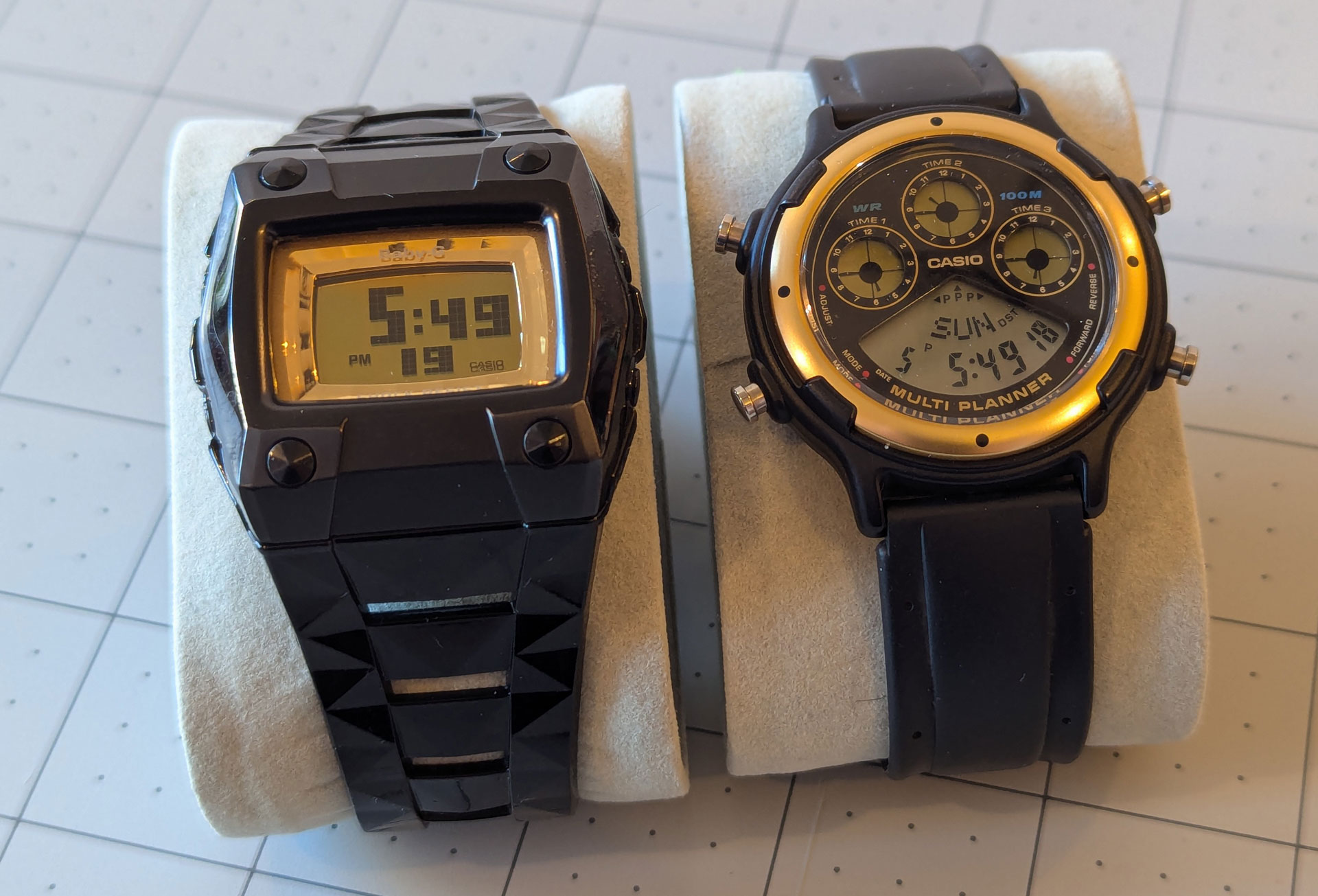
So those are my two old-but-gold Casios. I like the strangeness of both of them, even when it gets in the way of practicality at times. It's hard to imagine something like this being made today, when high-resolution color screens are cheap and smartwatches are infinitely customizable, but I do think there's something charming about the way that Casio managed to experiment even within the constraints of these little monochrome LCD displays.